
Many people need human tissue donation, but
Currently, Korea has limited human tissue donation,
relying on imports for approximately 91.6% (as of 2023) of transplant materials.




Human tissues are essential for treating burns, bone cancer, severe eye diseases, and injuries involving bones, joints, and ligaments.
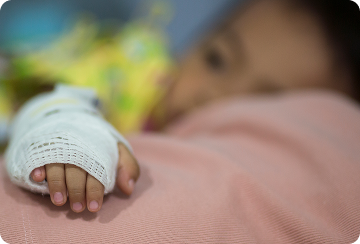
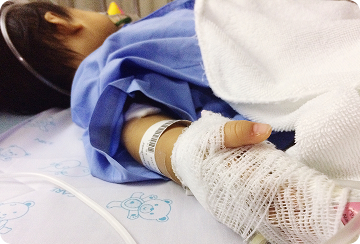
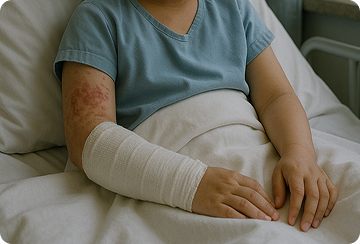
Many people need human tissue donation, but
Currently, Korea has limited human tissue donation,
relying on imports for approximately 91.6% (as of 2023) of transplant materials.
Import Dependency of Human Tissue Transplant Materials
Domestic Production
8.4%
Raw Material Imports
60.2%
Finished Product Imports
31.4%
Source: Ministry of Food and Drug Safety
Over 90% of human tissues used in Korea are imported. Dependence on imports causes economic burdens for patients and may lead to supply instability when demand suddenly increases.
Some imported tissues are collected overseas after use and may not guarantee safety or quality due to limited traceability and verification.
Human tissue donation refers to the act of providing part of one's tissue after brain death or death, without compensation,
to help others recover health, restore bodily functions, or prevent disabilities.
A single donor's tissues can bring hope and healing to up to 100 people.
Tissues that can be donated
「According to Article 3 of the Act on Safety, Management, etc. of Human Tissue
Skin, bone, cartilage, tendons and ligaments, muscles, corneas, heart valves, blood vessels, nerves, and heart.

Skin
Burn treatment

Bone
Bone cancer, bone injury

Cartilage
Cartilage injury

Tendons and ligaments
Tendon repair, degenerative diseases

Fascia
Skin defect

Vessels
Coronary artery bypass surgery, organ transplant surgery

Heart valves
Heart valve disease, heart valve replacement surgery

Amnion
Corneal damage, chronic surface disease

Nerves
Damaged peripheral nerves, regeneration

Heart
Atrial or ventricular shock defect
Anyone can donate human tissue regardless of age. However, the eligible age for donation may vary depending on the donor's health condition and the medical professional's assessment.
Tissue donation is not permitted in the following cases.

Unknown cause or time of death

Unidentified individuals

Malignant tumors
or history of cancer

Sepsis

Infectious diseases
(e.g., AIDS, hepatitis B/C, etc.)

Exposure to toxic or hazardous substances
(e.g., drugs, heavy metals, pesticides, carbon monoxide)

Autoimmune diseases, hormonal disorders, cancer treatment, or immunosuppressive therapy

Active bacterial infections, tuberculosis, malaria, or systemic infections

Degenerative neurological diseases
(e.g., Creutzfeldt-Jakob disease, Parkinson's, dementia, etc.)
The process of human tissue donation is as follows.
When a potential tissue donor is identified, the case is reported to the KODA
(Legal Basis: Article 16(2)(9) of the Act on Safety, Management, etc. of Human Tissue)
KODA Call Center: 1577-1458
A coordinator is dispatched
Medical review of the deceased and family consultation
Assessment of medical suitability for tissue donation
Suitable tissues are transported to authorized tissue banks
The donor's body is prepared
Average procedure time: 6–8 hours after death
Funeral
Crematorium